What Counts as a Water Removal Emergency in New Augusta
Not every leak needs a midnight truck roll. These do.
- Standing water more than half an inch deep on any finished floor
- Active supply line break, water heater rupture, or burst pipe
- Sewage backup through a floor drain, toilet, or tub
- Storm intrusion through roof, windows, or foundation
- Sump pump failure during or after heavy rain
- Appliance overflow that has reached subfloor or adjacent rooms
- Any water touching electrical outlets, panels, or HVAC equipment
If you checked one box, you have an emergency. Shut off the water source if safe, kill power to the affected area, and call.
The First Hour: Your Numbered Playbook
Follow these steps in order while help is en route.
- Stop the source. Main shutoff, appliance valve, or sandbags at the door.
- Cut power to wet rooms at the breaker. Do not stand in water to flip switches.
- Document everything. Photos and short videos of every wet surface, from multiple angles.
- Move what you can. Lift furniture legs onto foil or blocks. Get electronics and paper off the floor.
- Pull rugs back to expose hardwood or tile. Wet rugs trap moisture against finished floors.
- Call your restoration company before your insurance carrier. Mitigation comes first, claims come second.
- Notify your insurer once a crew is dispatched. Get a claim number in writing.
For a deeper walkthrough, our first steps after water damage guide covers the homeowner side in detail.
What Your Money Pays For
- Truck-mounted and portable extraction units
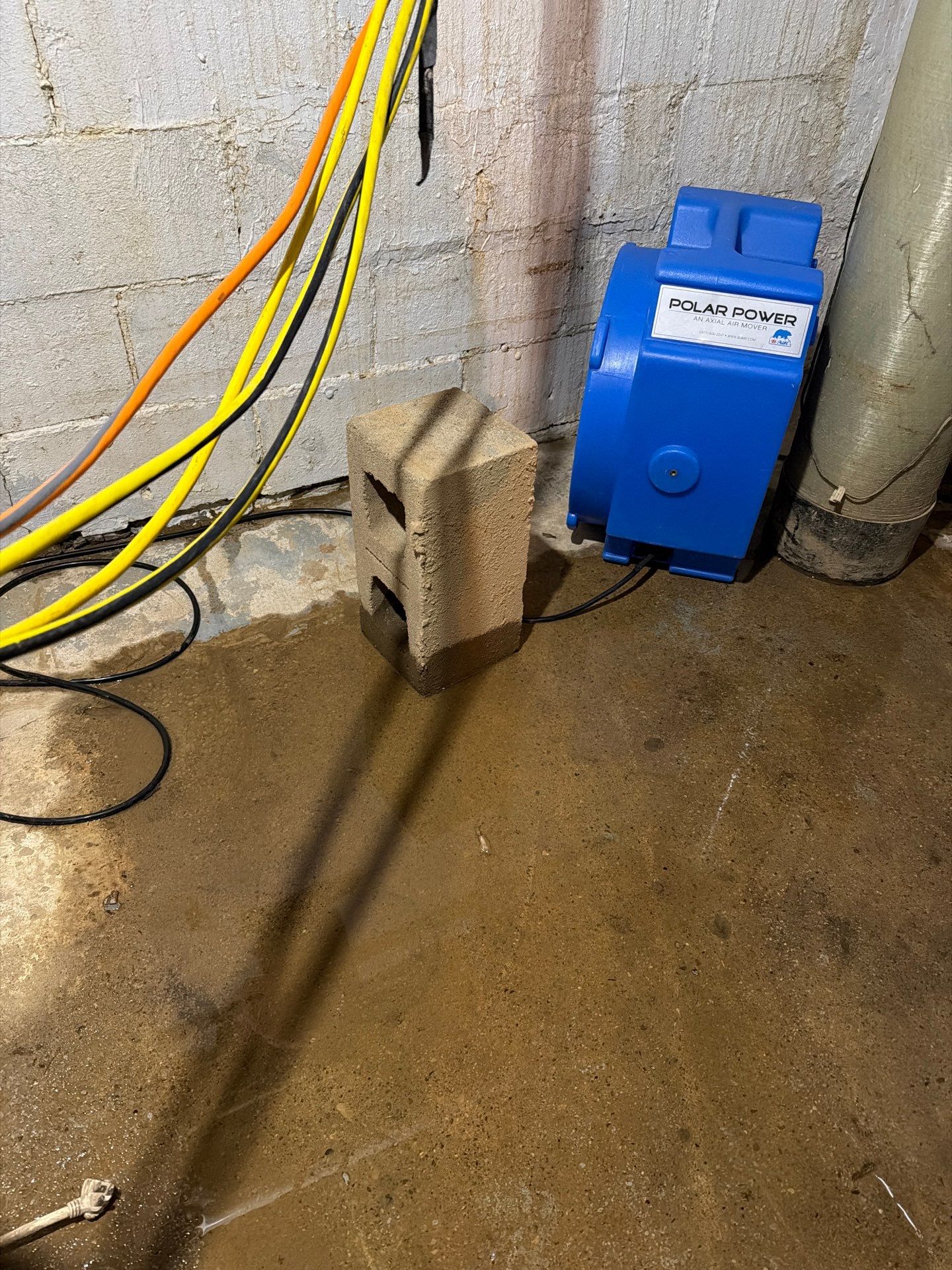
- Commercial air movers (one per 50 to 70 square feet of wet floor)
- LGR or desiccant dehumidifiers sized to the affected cubic footage
- Antimicrobial application on Category 2 and 3 losses
- Moisture mapping and daily readings logged for your insurer
- Controlled demolition of unsalvageable materials
- Content manipulation, pack-out, and storage when needed
- Direct insurance billing and Xactimate-aligned documentation
Questions to Ask Before You Hire
- Are your technicians IICRC certified, and can you send the cert numbers?
- What is your real ETA to my New Augusta address right now?
- Do you bill my insurance directly or do I pay and get reimbursed?
- Will I get daily moisture readings in writing?
- What is your written guarantee if mold appears within 30 days?
- Who is my single point of contact through the job?
A company that answers all six without stalling is a company worth letting through the door. Save the New Augusta Water Restoration number in your phone before you need it. The homeowners who recover fastest are the ones who made the call inside the first hour, not the first day.
What Happens in the First 72 Hours On Site
Speed matters because mold can colonize wet drywall and framing inside three days. Here is the typical New Augusta Water Restoration timeline once a crew arrives.
- Hour 0 to 1: safety check, source confirmation, extraction begins, photos logged
- Hour 1 to 3: contents protected or moved, baseboards pulled, drywall flood cuts if needed
- Hour 3 to 6: air movers and dehus placed, first moisture map recorded
- Day 2: readings repeated, equipment repositioned, adjuster update sent
- Day 3: reassess drying targets, pull equipment from any area that has hit dry standard
- Day 4 to 5: final readings, sign-off, hand-off to reconstruction
If a crew cannot describe a timeline this specific, they are improvising on your dime.
Insurance: What to Say and What to Avoid
Adjusters move faster when you use the right language. Quick script.
- Say: sudden and accidental discharge, date and time noticed, source identified
- Say: mitigation company is on site, IICRC certified, drying logs available
- Avoid: long-term, gradual, slow leak, noticed weeks ago
- Avoid: admitting deferred maintenance before facts are clear
- Request: claim number, adjuster name, direct phone, email in writing
Most homeowner policies cover sudden water events. Flood from rising surface water needs a separate flood policy. Sewage backup often needs a specific endorsement. Our full guide to filing a water damage insurance claim walks through the paperwork.
Red Flags When Hiring an Emergency Crew
- No IICRC certification number on request
- Door-to-door solicitation after a New Augusta storm
- Pressure to sign an assignment of benefits before scope is clear
- Cash-only or large up-front deposit demands
- No moisture readings, no drying log, no daily updates
- Refusal to communicate directly with your adjuster
- Vague pricing or a flat number with no scope behind it
After-Hours Surcharges and What Is Negotiable
Emergency work runs nights, weekends, and holidays. Some line items reflect that, others should not. Know the difference before you sign.
- Typical after-hours uplift: 15 to 25 percent on labor, not on equipment
- Holiday emergency premium: capped around 25 to 35 percent in most New Augusta markets
- Travel or trip fees: reasonable inside 30 miles, push back beyond that
- Equipment rental: daily rate, should drop off the invoice the day it leaves your home
- PPE and consumables: small line, flat or per-tech, never percentage based
Reputable shops will show you the Xactimate code behind each line. If a price feels invented, it probably is.
Pricing Ranges You Can Actually Trust
Most homeowners want a number before they sign anything. Reasonable. Here are honest ranges based on IICRC water categories and the typical scope we see in New Augusta.
- Emergency extraction only (small, clean water, single room): $400 to $900
- Category 1 mitigation (clean water, kitchen or bath leak): $1,500 to $3,500
- Category 2 mitigation (gray water, dishwasher or washer overflow): $2,500 to $6,000
- Category 3 mitigation (sewage, flood, contaminated): $4,500 to $12,000+
- Full basement flood with finished walls and flooring: $5,000 to $15,000
- Whole-home loss from supply line or storm: $15,000 to $40,000+
Variables that move the number: square footage affected, water category, materials involved (hardwood and engineered floors cost more to dry), how long the water sat, and whether mold remediation is needed. Read our breakdown on restoration cost and 24/7 service for line-item detail.
Response Time: What Fast Actually Means
Marketing pages love the phrase rapid response. Here is what it should mean in practice.
- Phone pickup: under 60 seconds, live human, 24/7
- Dispatch decision: under 10 minutes from first call
- On-site arrival in New Augusta metro: 60 to 90 minutes typical, faster if a crew is nearby
- Outlying New Augusta areas: 90 to 120 minutes
- Extraction starts: within 15 minutes of arrival
- Drying equipment placed: within the first 2 hours on site
Ask any company you call to commit to these numbers verbally. If they hedge, keep dialing.
New Augusta Water Restoration dispatches from multiple staging points around New Augusta, which is the only way to keep arrival windows tight during a regional event. When a single storm hits and 200 homes call in the same afternoon, the company with one truck across town becomes the company that shows up tomorrow.
Why New Augusta Homes Flood More Than Owners Expect
- Clay-heavy soil that sheds water toward foundations
- Older neighborhoods with combined storm and sanitary sewers
- Sump pumps that fail during the same storm that knocks out power
- Frozen supply lines in unconditioned crawl spaces
- Aging galvanized and polybutylene plumbing in mid-century homes
- Flat commercial roofs with clogged scuppers
Knowing the cause helps your adjuster classify the claim correctly and helps us scope drying faster.